The Myth That Every Routine Must Be Done at the Same Time
Routines linked to recurring events can make habits easier to resume when the day shifts, without requiring you to protect the same clock time.

A routine tied to a recurring event can survive a changing schedule better than one that depends on the clock. Routines linked to recurring events use cues such as closing a laptop, putting away dinner dishes, or arriving home—not a particular hour—to remind you what to do next.
That does not make clock-based routines useless. A fixed time can help when your day is predictable, and some activities need a scheduled slot. But if the cue keeps moving or disappears, the routine can start to feel like a daily appointment you are failing to keep. An event cue offers another option: attach a small action to something that already happens.
A moving schedule made the clock cue fragile
Imagine Maya, an invented person who wants to sketch regularly. She works from home, but her meetings shift, errands interrupt the afternoon, and some evenings are quieter than others. She chooses 7:30 p.m. as her drawing time because it sounds orderly.
On days when dinner runs late or a call continues past the hour, Maya sees the time pass and assumes the chance is gone. On other days, she sits down at 7:30 but is still mentally occupied with work. The issue is not a lack of interest in drawing. The cue depends on a clock moment that does not reliably match her availability or attention.
She could keep moving the appointment, but then she would need to decide on a new time repeatedly. Instead, Maya looks for an event that tends to mark a natural transition in her day.
An event cue connects the routine to a transition
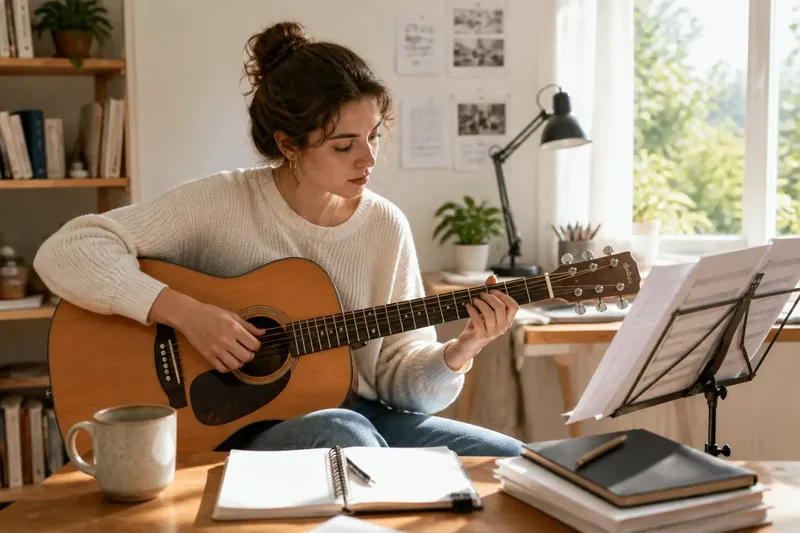
Maya chooses shutting down her work laptop as the cue. After she closes it, she clears one corner of the table, takes out a sketchbook and makes a few marks. The order matters: the event comes first, then a small, recognizable action follows.
A cue is a signal that helps you remember to begin. A recurring event can work as a cue because it already has a place in your sequence of activities. “After I close the laptop” is more specific than “sometime after work,” yet it does not demand that work end at the same hour each day.
Maya keeps the action modest enough to fit different kinds of evenings. She is not promising herself a finished drawing or a long session. The routine is simply to open the sketchbook and begin. If she has more energy, she can continue; if not, she has still preserved the link between the cue and the practice.
Choose an event that naturally precedes the action you want to remember.
The cue needed a flexible version for disrupted days
After trying the new arrangement in this imagined situation, Maya notices a practical weakness: sometimes she does not work at home, so there is no laptop to close. She adjusts the cue without turning it into a strict chain. When she works elsewhere, packing away her work materials can stand in for shutting down the laptop.
This is not a claim that the routine will happen every time. It is a way to preserve a useful signal across different settings. The replacement event should mark roughly the same transition, such as finishing work and moving toward personal time. If the substitute is too vague—“when I get a chance”—it may not remind her at all.
She also decides what to do when the transition is swallowed by an urgent obligation. Rather than trying to squeeze drawing into an unsuitable moment, she lets the routine be missed and resumes at the next workable cue. That keeps one interruption from turning into a verdict about her ability to maintain a practice.
The result was a routine that could move with the day
In this hypothetical account, Maya’s result is not a perfect streak. It is a clearer beginning. When she closes her laptop or packs her work materials, she has a familiar next action: make space, open the sketchbook, start. On evenings when the transition is delayed, the routine shifts with it. On a day with no suitable opening, she can leave the practice for the next ordinary transition.
The change also gives Maya a better way to notice what is getting in the way. If she reaches the cue but does not draw, she can ask whether the action is too demanding, the workspace is difficult to prepare, or the chosen event does not actually lead into personal time. Those are specific problems she can adjust; the clock alone would only tell her that the planned hour passed.
For a different person, a different event may fit better. Finishing breakfast might cue a short language exercise; putting a child’s lunch container away might cue setting out materials for a hobby. These are possibilities, not universal formulas. The event needs to recur often enough to be useful and connect naturally to the action.
How should you choose and adjust an event cue?
What counts as a recurring event?
It is an action or transition that happens as part of your usual sequence, such as locking the front door or clearing the table. It need not happen at an identical time, but it should be recognizable when it occurs.
Should the routine happen immediately after the cue?
A close connection makes the sequence easier to remember, but “immediately” is not a rule. If you need a pause, choose a clear next event or a visible prompt so the intended action does not dissolve into an open-ended intention.
What if the event does not happen that day?
Decide on a sensible alternative cue for the situations you can anticipate, as Maya did when she worked away from home. If neither cue fits, resume at the next suitable opportunity rather than treating a missed occasion as a reason to abandon the practice.
Can a routine still use a clock time?
Yes. A scheduled time may be useful when your day is stable or the activity requires coordination with other people. An event cue is an alternative for routines that need to flex, not a reason to reject time-based plans.
Let the cue support the practice, not police it
Maya’s imagined experience shows why routines linked to recurring events can be useful: they attach a small action to a transition that already exists, while allowing the hour to vary. The routine becomes easier to restart because the signal is part of the day’s sequence rather than a time that can pass unnoticed.
To try the idea, name one action you want to repeat, identify a recurring event that naturally comes before it, and make the first action easy to recognize. Then watch for a practical sign of fit: when the event occurs, do you know what to do next? If not, choose a clearer cue or a smaller opening action. Keep the routine adjustable enough to belong to your real day.